Beyond HEDIS: How Forward-Thinking Health Systems Are Redefining Quality Measurement

June 8, 2026
What is HEDIS?
The Healthcare Effectiveness Data and Information Set (HEDIS) is the most widely used quality measurement framework in the United States. It was developed by the National Committee for Quality Assurance (NCQA) to give health plans, employers, and regulators a standardized way to evaluate performance and is currently used by over 90% of plans. HEDIS tracks more than 90 measures spanning preventive care, chronic disease management, behavioral health, and patient experience. A few examples include:
- Asthma medication use
- Comprehensive diabetes care
- Breast cancer screening
- Antidepressant medication management
- Smoking cessation advice
HEDIS data is collected retroactively. Healthcare organizations pull clinical and administrative data from the prior calendar year and submit for review between January and May. Because performance is evaluated on care that has already been delivered, quality improvement doesn’t happen in real time. Instead, the clinical decisions made today shape how a plan is measured and reimbursed 12 to 18 months from now.
How a plan performs on HEDIS metrics has a direct impact on what it earns and what it can offer its members. HEDIS results feed directly into federal quality programs, including the CMS Medicare Advantage Star Ratings Program and the Medicaid Core Sets. The Star Ratings program scores Medicare Advantage plans on a 1-to-5-star scale across quality, patient experience, and medication-related measures, many of which overlap directly with HEDIS. Higher scores translate to bonus payments and the ability to offer more competitive member benefits. CMS also draws on HEDIS data to monitor Medicare Special Needs Plans, track performance gaps, and drive improvement across federal programs.
Key Takeaways
- HEDIS is the dominant quality framework in U.S. healthcare, measuring preventative care, chronic disease care, behavioral health, and patient experience
- Some HEDIS measures are automatic; others require time-consuming manual chart abstraction
- AI LLM-guided abstraction is faster, more flexible, and more scalable than previous approaches
How HEDIS data is collected
HEDIS measures are either collected automatically, from claims and administrative data, or through manual chart abstraction, where a trained reviewer reads clinical notes, identifies the relevant data, and enters it into a structured format. Reviewers are often:
- In-house teams who designate staff each year between January and May to work through their chart review backlog. It's time-intensive and consumes clinical and administrative bandwidth throughout the season.
- Specialized HEDIS vendors who take on abstraction as a managed service. They bring scale and expertise, but they're often built around the same annual window, and scaling output means scaling headcount.
- NLP vendors who work by applying natural language processing to clinical notes to enable year-round abstraction, rather than a once-a-year sprint. NLP vendors can save clinicians time by automating HEDIS documentation review, but their accuracy can drop after an Electronic Health Record (EHR) change, which may lead to data gaps and extra manual cleanup.
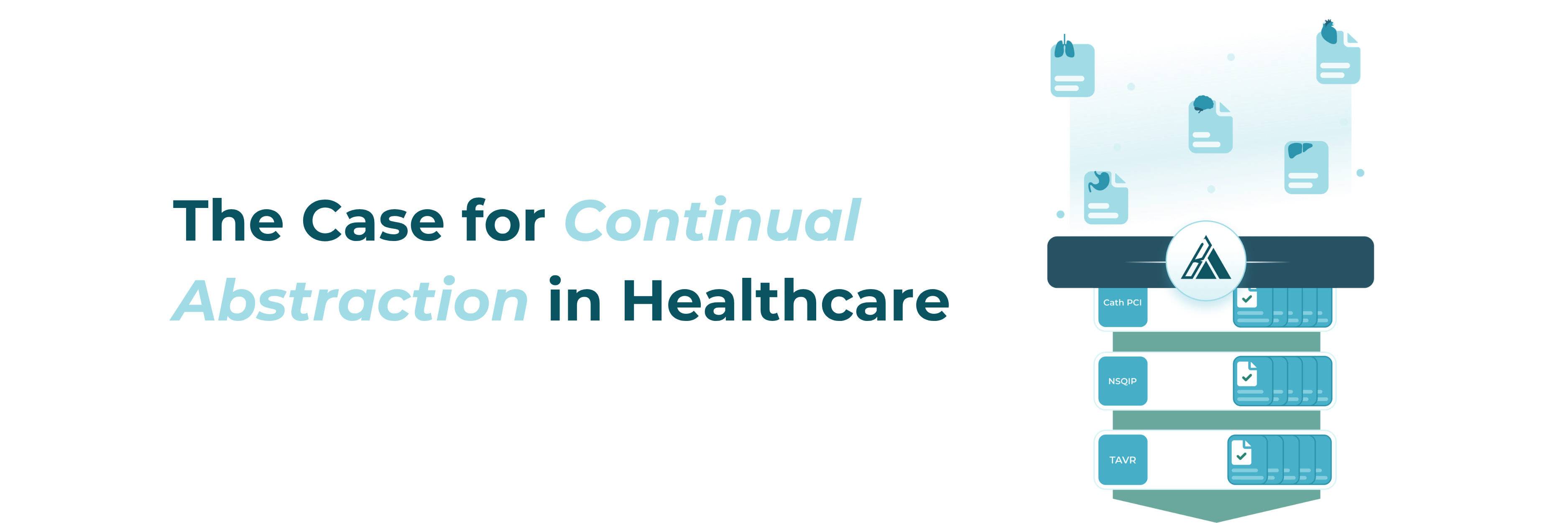
Brim was built to bring advanced AI capabilities to in-house abstraction teams, for a combination of scalable cost savings and quality control. Brim supports continuous, year‑round abstraction and is easy to adapt as clinical documentation evolves.
How AI is improving clinical data capture
Large language models are fundamentally changing the way organizations approach chart abstraction. Unlike rule-based NLP, LLMs can interpret clinical language in context, focused on understanding what a note means, not just pattern-matching against it. They can be configured for new measures or custom variables in hours rather than months.
Brim’s AI-guided abstraction can reduce review time by 50 to 90 percent compared to manual workflows. In one case, a pediatric health system cut monthly chart review from around 320 nursing hours to under 4 hours, a 98% reduction, all while maintaining 99% agreement with manual review.
NCQA has committed to making HEDIS fully digital by MY 2030, transitioning to Electronic Clinical Data Systems (ECDS) and phasing out manual chart retrieval by 2029. CMS has also set a goal to move to digital reporting across all its quality programs by 2030. Health systems building scalable abstraction infrastructure now are preparing for both.
What’s possible with continuous abstraction
When quality data flows year-round, healthcare teams can focus on tasks that annual HEDIS reporting alone doesn't accommodate.
- Identify gaps before the submission window closes: A gap identified in March can be addressed starting in the following month. With traditional retrospective HEDIS, that gap only surfaces twelve months later.
- Track quality outside of HEDIS measures: Value-based contracts, specialty programs, and internal quality initiatives often require metrics outside the HEDIS measure set. Continuous EHR abstraction supports custom measure development on any timeline.
- Submit to registries year-round: Clinical registries like NSQIP require structured data abstracted from patient notes on an ongoing basis. Continuous abstraction means cases are submitted and accepted more often.
- Get better data for research and clinical programs: Claims data captures what’s billed. Clinical notes capture much more data like medication adherence, patient conversations, disease progression assessments, and care plans that were discussed but never coded. Abstracting that at scale makes population health more precise.
Brim’s AI-guided abstraction for HEDIS and more
Brim is an AI-guided chart abstraction platform built for the full range of use cases that depend on structured clinical data. The organizations getting the most out of their quality programs are the ones treating it as a part of their infrastructure, not just an annual exercise.
Brim can be applied in several ways, depending on your organization.
- In-house quality teams use Brim to run abstraction year-round, without the seasonal staffing surge. Your teams define the variables that matter to your program, HEDIS or otherwise.
- Registry programs use Brim to abstract and prepare clinical data continuously rather than in batches. Brim can support any registry workflow, with a growing Variable Library of pre-built pipelines for various cases.
- Every extraction is auditable and explainable. Abstractors can accept, edit, or remove AI suggestions. Brim deploys in your own environment. PHI never leaves your network, and no data is used for model training.
How to prepare for the future of HEDIS abstraction
HEDIS is, and will remain, a core part of healthcare compliance and benchmarking. With NCQA moving toward fully digital quality measures by 2030, structured EHR data becomes even more central to how those measures are captured and validated. Health systems that invest in reliable abstraction infrastructure now will be better prepared than those trying to retrofit workflows once the requirements become mandatory
Brim is designed to support teams ready to take the next step. It supports continuous, accurate abstraction across clinical programs without the seasonal surge in manual work. If you’re ready to see how this fits into your workflow, connect with us to schedule a personalized demo.