The ROI of Patient Registries: How Health Systems Justify the Investment

August 19, 2026
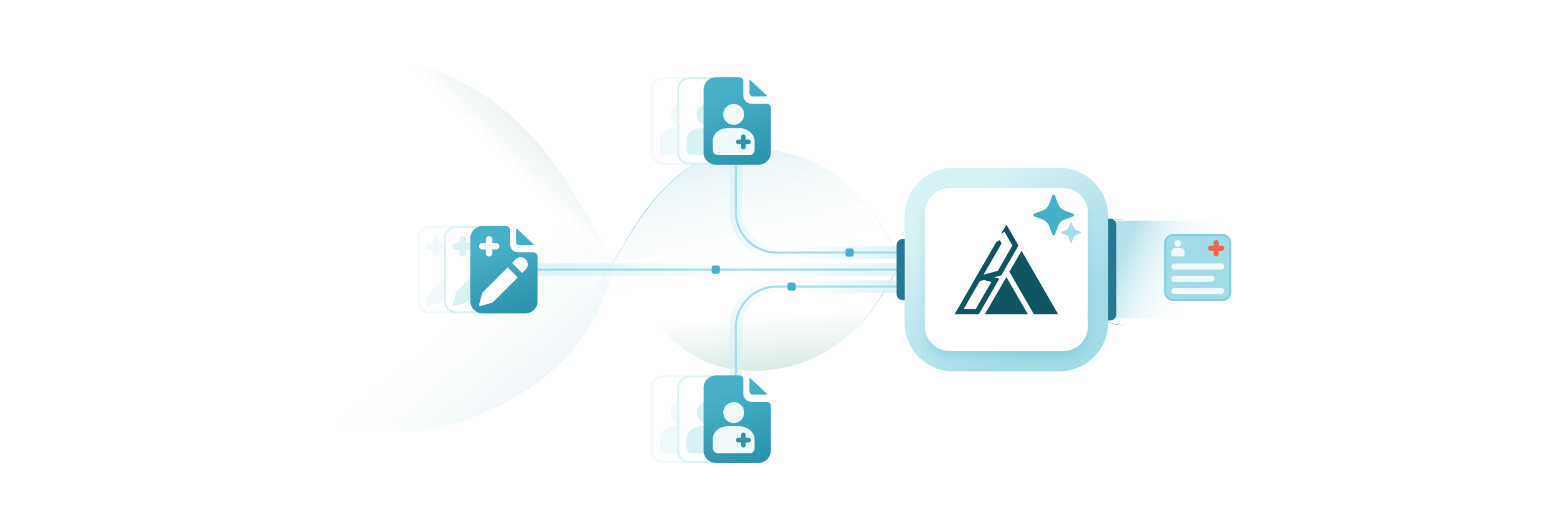
Patient registries are essential for clinical research, patient care, and public health initiatives. Registries collect structured data, but labs and institutions are responsible for generating that data by manually reviewing large volumes of unstructured patient notes. That process can be slow, costly, and limits how many sites can participate and how much each site can submit. AI can accelerate this work, but many platforms lack the safeguards required for clinical use. Brim addresses that gap with AI‑guided chart abstraction that is fast, validated, and built for clinical environments.
Key takeaways
- Patient registries are standardized databases of patient information from clinical notes.
- Manual abstraction is too slow and costly, but many AI tools lack the validation, oversight, and privacy safeguards necessary for clinical use.
- Brim helps facilities submit more data to registries, resulting in more robust registries and ultimately better insights
What are patient registries?
Patient registries are databases of structured clinical records and patient notes that provide information on a specific disease type or defined population. These registries serve as the foundation for clinical research, public health initiatives, regulatory compliance, and patient care.
There are many examples of how patient registries are used:
- Track disease progression, treatment patterns, and outcomes in a defined population
- Provide detailed data on how drugs, devices, and procedures perform to inform coverage decisions
- Support drug and device manufacturers in meeting post-marketing requirements and identifying patient populations for trial design
- Measure quality of care across factors like safety, effectiveness, efficiency, and equity
The value of patient registries
Patient registries support a broad range of clinical applications, but their value depends on how complete and accurate the data is. Registries receive structured submissions from participating sites, but sites must abstract that structured data from unstructured clinical notes. For example, the NSQIP registry consists of over 100 variables, ranging from straightforward fields like patient demographics, which are often available in databases, to complex fields describing surgical approach, outcomes, and followups. Manual abstraction requires specialized staff who may take up to 30 minutes per patient case.
AI systems like large language models (LLMs) can support quicker, more consistent data abstraction for patient registries, but require a high level of validation and safeguards due to the sensitive nature of clinical applications. Brim is built with this in mind. Its platform uses a human‑in‑the‑loop, privacy‑first approach to deliver accurate, AI‑guided chart abstraction without compromising security.
Here’s how Brim helps sites submit more data to registries without adding staff:
- Automated data extraction that replaces slow, manual chart review with fast, AI‑driven abstraction.
- Higher accuracy and consistency through standardized, repeatable data capture and transparent, human-in-the-loop workflows.
- Greater submission capacity, enabling existing sites to submit more cases with the same staff, and sites that previously couldn’t meet submission thresholds to participate.
- Significant time and cost savings that lower the operational barrier to registry participation, making it sustainable even for smaller or resource-constrained sites
How Brim Improves ROI for patient registries
A registry is only as useful as the data it contains. By helping sites abstract and submit more data with less manual effort, Brim increases the volume and completeness of registry data. More sites participating, more cases submitted, and more complete structured data means more robust analysis and more reliable conclusions for everyone who uses the registry.
Reduces the time and cost of data abstraction
For registry-participating sites, data abstraction is one of the most resource‑intensive responsibilities. Certified Tumor Registrars (CTRs) typically abstract 500–700 cases per year, and national workforce surveys report average annual compensation in the $60,000–$82,000 range, depending on experience and region, according to the National Cancer Registrars Association’s 2022 workforce survey. Large registry programs often rely on multi‑person abstraction teams, creating substantial administrative workload and operational cost. Brim’s AI‑guided abstraction platform reduces abstraction time by 50–90%, helping sites keep pace with growing case volumes without adding staff. Sites that previously hit capacity limits can now submit more cases, and sites that could not participate at all can now meet submission thresholds. More submissions from more sites means a richer, more representative registry for everyone.
Case study
A pediatric health system needed a more efficient way to identify high‑risk surgical patients, a process that required nurse practitioners to manually review hundreds of charts each month across dozens of criteria buried in unstructured notes. Brim reduced the monthly chart review from roughly 320 nursing hours to under 4 hours, a 98% reduction, while maintaining 99% agreement with manual review.
Partners with leading registry programs
Brim is a partner of AACR Project GENIE, a leading precision oncology data-sharing initiative. GENIE brings together clinical-grade genomic and outcomes data from the top 20 cancer centers, creating an open-access registry with more than 250,000 sequenced tumors from over 200,000 patients.
Participating institutions are increasingly turning to Brim to modernize the clinical data abstraction required for GENIE. While all sites follow a shared protocol, each adapts it to local systems and workflows. Brim addresses this by enabling sites to import their own REDCap data dictionaries and immediately begin AI-guided abstraction with field-level, site-specific instructions.
Brim’s work with GENIE highlights the flexibility of its federated deployment model. Institutions can adapt the system to their own data environments and governance requirements, contributing structured abstraction outputs, rather than raw PHI, to shared consortium settings. This approach preserves data sovereignty while still enabling population-scale insights.
Brim helps sites meet the demands of registry submission while increasing the volume and quality of data they contribute. More complete data from more institutions means stronger evidence and more reliable best practices for everyone who uses the registry.
Designed for clinical use
Brim is designed for the clinical environment and features high-level privacy protections and built-in validation workflows for trustworthy, compliant data abstraction.
Ensuring patient confidentiality
Brim deploys directly inside your institution’s own environment, ensuring that no PHI ever leaves your network. Its architecture is built around strict data‑minimization principles.
No patient data is used for model training, and our bring‑your‑own‑LLM approach limits exposure to only a few trusted providers. Combined with RAG‑based workflows and prompt optimization instead of fine‑tuning, Brim enables AI‑powered chart abstraction without increasing your data surface. Our SOC 2 Type II compliance further demonstrates our commitment to transparent, independently validated security practices.
Validation and explainability at every step
Brim is built to make AI‑assisted chart abstraction reliable for clinical use. Here’s how:
- Transparent, explainable outputs: Brim links every extracted data point directly to the original source text, making each output easy to audit and trust.
- Human‑in‑the‑loop by design: Abstractors can accept, edit, or remove outputs, and their feedback continuously improves future recommendations.
- Validation: Brim validates abstraction pipelines end‑to‑end and provides monitoring tools for institution‑specific workflows, all within a HIPAA‑aligned platform built for healthcare.
The bottom line
The process to submit to patient registries can be slow, tedious, and costly. Brim uses validated, human-in-the-loop AI to automate chart abstraction to help organizations submit faster, higher quality data, freeing up their staff to focus on higher-level work. More data in the registry means more holistic information and overall stronger data.
You can find a breakdown of how Brim thinks about ROI for the National Surgical Quality Improvement Program, or NSQIP registry at brimanalytics.com/resources/brim-for-nsqip.
To see how Brim can help your institution contribute more, schedule a personalized demo today.